
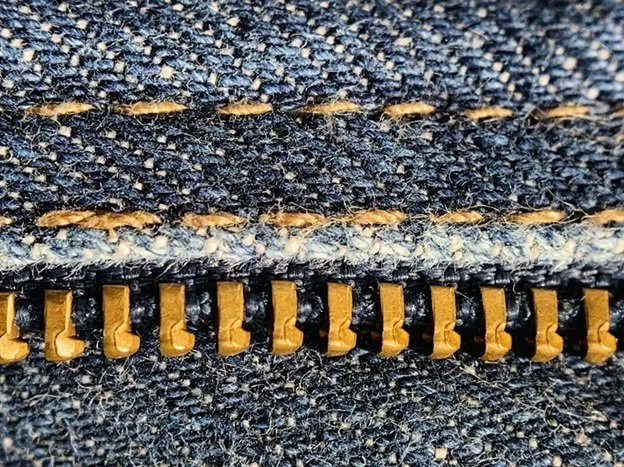
The Humble Zipper, Explained
The Humble Zipper, Explained.
Zippers are one of those things you really only notice when they stop working.
They’ are everywhere—jackets, jeans, bags, cushions—and yet they are often the first point of failure in an otherwise perfectly good piece. Understanding why comes down to something surprisingly simple: how they work, what they’re made of, and where they wear out.
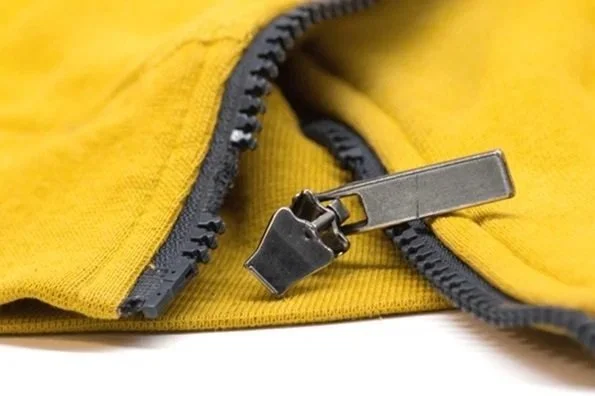
A broken zipper with missing teeth
How a Zipper Works
At its core, a zipper is just a clever alignment system. Two rows of teeth (or “elements”) run along either side of an opening. Each tooth is shaped with a hook and a hollow, designed to interlock with its opposite. The slider—the piece you pull—forces those teeth together in a precise sequence as it moves up and separates them as it moves down.
Inside the slider is a Y-shaped channel that guides the teeth into position. For the zipper to function, everything has to be consistent: tooth size, spacing, and alignment all need to match exactly.
When it works, it feels effortless. When it doesn’t, it’s usually because one small part has fallen out of tolerance.
The Most Common Types
Most zippers fall into one of three categories. Each has a distinct feel…and a distinct failure mode.
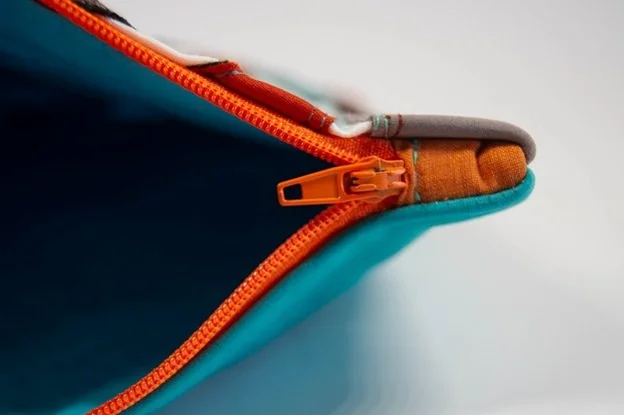
Coil Zipper
1. Coil (Nylon or Polyester)
These are made from a continuous spiral of plastic filament sewn onto the tape. They’re flexible, lightweight, and forgiving. Because the “teeth” are really a continuous coil, they can bend around curves and handle stress in multiple directions.
You’ll find them on:
Activewear
Bags and backpacks
Lightweight jackets
They’re also among the easiest to repair—minor misalignment can sometimes correct iteself with use. Unfortunately, when the coil gets pulled out of the tape (not entirely dissimilar from when the tape is pulled out of a cassette – 90’s kid throw back here) its time to replace.
2. Molded Plastic
These have individual plastic teeth, each molded and fused directly onto the tape. They strike a balance: lighter than metal, more structured than coil. They also resist corrosion, making them a go-to for outdoor gear.
You’ll see them on:
Fleeces and casual outerwear
Kid’s wear
Outdoor equipment
They are super versatile and are often repaired with a new slider and box stop… but when the teeth get damaged or removed, it’s usually time for a replacement. It’s a bit like replacing a toothbrush versus a full blown visit to the dentist.
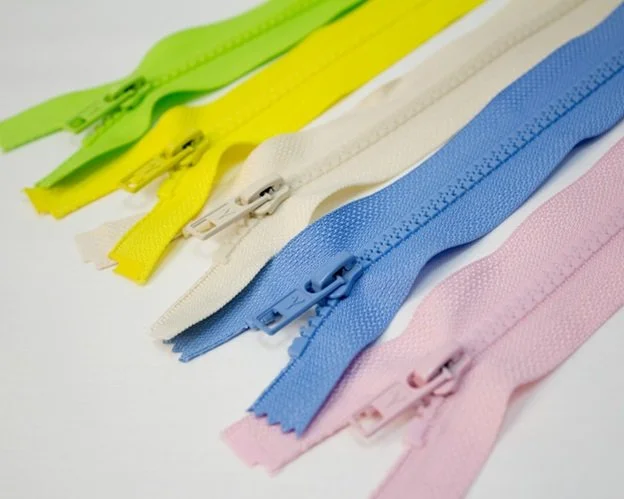
Molded Plastic Zipper
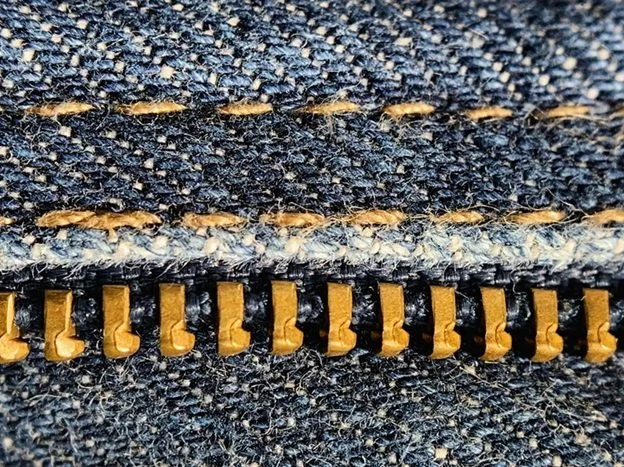
Metal Zipper
3. Metal
The original workhorse. Each tooth is stamped from metal and clamped onto the tape. They’re strong, rigid, and built for abrasion—but heavier and less flexible.
Common uses:
Denim
Leather goods
Workwear
They age well aesthetically, but not always mechanically. Depending on the metal, they can corrode or degrade over time—especially when dirt builds up or they sit unused for long periods.
Why Zippers Fail and What is Needed for Repair
Most people assume a broken zipper means “missing teeth.” Unlike my 1st grader, it’s not always.
1) The slider
The slider does the actual work of forcing the teeth together. Over time, it wears down and stops applying enough pressure. When that happens, the zipper “zips” but immediately separates behind it. This is the most common failure—and the most fixable. To identify if your zipper is broken due to the slider, check the zipper over for missing teeth or visible wear. If it doesn’t have these, it may be the slider.
This does not require the entire zipper to be replaced, instead it just needs a new slider. This is the most simple and least expensive zipper repair.
2) Damaged or missing teeth.
If teeth are broken, bent, or missing entirely, the chain can’t interlock properly. This is the most easily identifiable as there will be areas that are obviously broken or distressed.
Replacement is usually the only solution
3) Failure at the base (pin/box)
On jackets, the insertion pin and retainer box take a lot of stress. If they crack or detach, the zipper won’t start correctly and/or the zipper will easily separate after being zipped shut.
If this is the case, this zipper needs to be replaced.
4) General wear
Zippers are often the least durable component of a garment. Dirt, corrosion, repeated stress, and simple time all contribute to failure.
Depending on the wear, these zippers could be repaired or replaced. Minor miss alignment and stiff movement can usually be repaired by cleaning, realigning and lubricating. However, broken tape or worn teeth most often require replacement.
When in doubt, get in touch. We love to help troubleshoot. Problem solving is the fun of repair. Let’s talk!
When’s the Best Time to Repair?
When’s the Best Time to Repair?
If you are dealing with a fabric hole, tear or worn area, you may be asking “when should I repair this?” The answer depends on the fabric content, construction, and what kind of result you’re hoping for, whether that’s a nearly invisible fix or something more visibly mended and expressive.
Here’s a guide to help you decide the right timing for different types of garments…
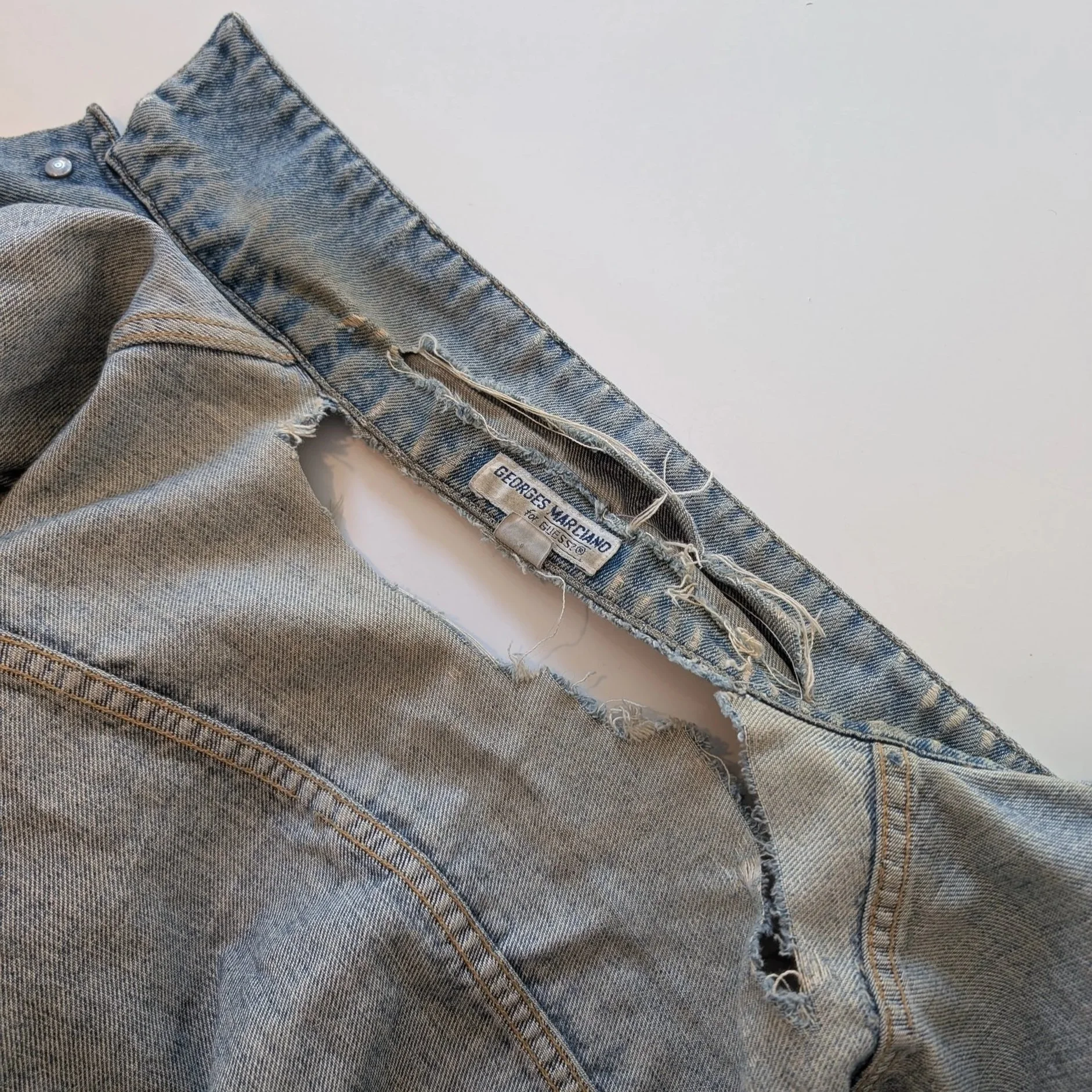
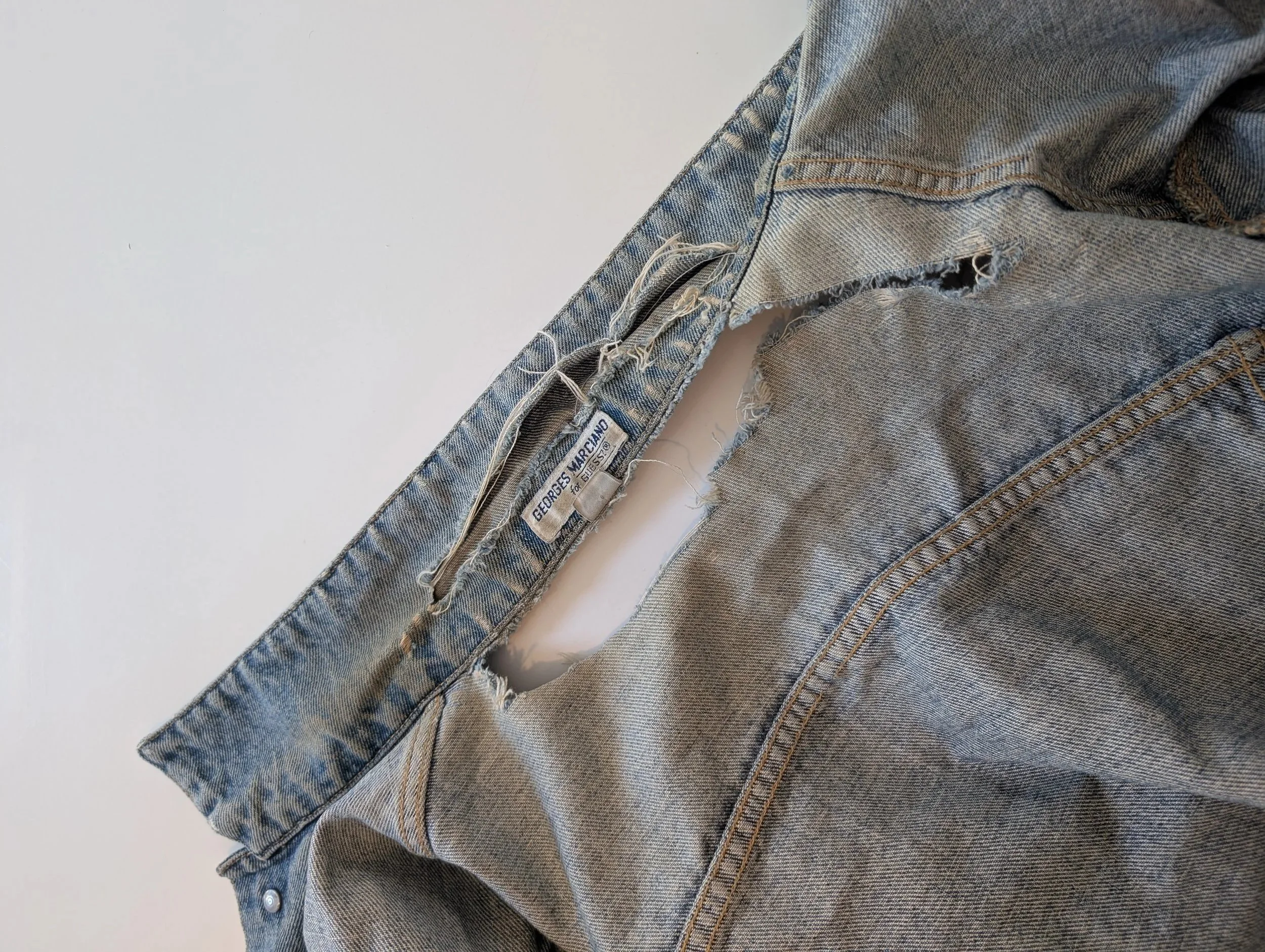
This is a beloved denim jacket. While it looks irreparable, denim is an incredibly forgiving fabric, allowing for discreet and visible repairs at many stages.
Denim
Denim is one of the most forgiving and versatile fabrics when it comes to repair timing.
If your goal is a discreet repair, sooner is always better. Non-stretch denim can often be reinforced even before a hole fully forms, when the fabric is just beginning to thin. While larger holes can still be repaired in a subtle way, they require more time and cost due to the added work involved.
If you’re open to or excited about visible repairs, timing matters much less. Denim can handle bold patches, decorative stitching, and darning at almost any stage. Even large holes can become part of the garment’s story rather than something to hide.
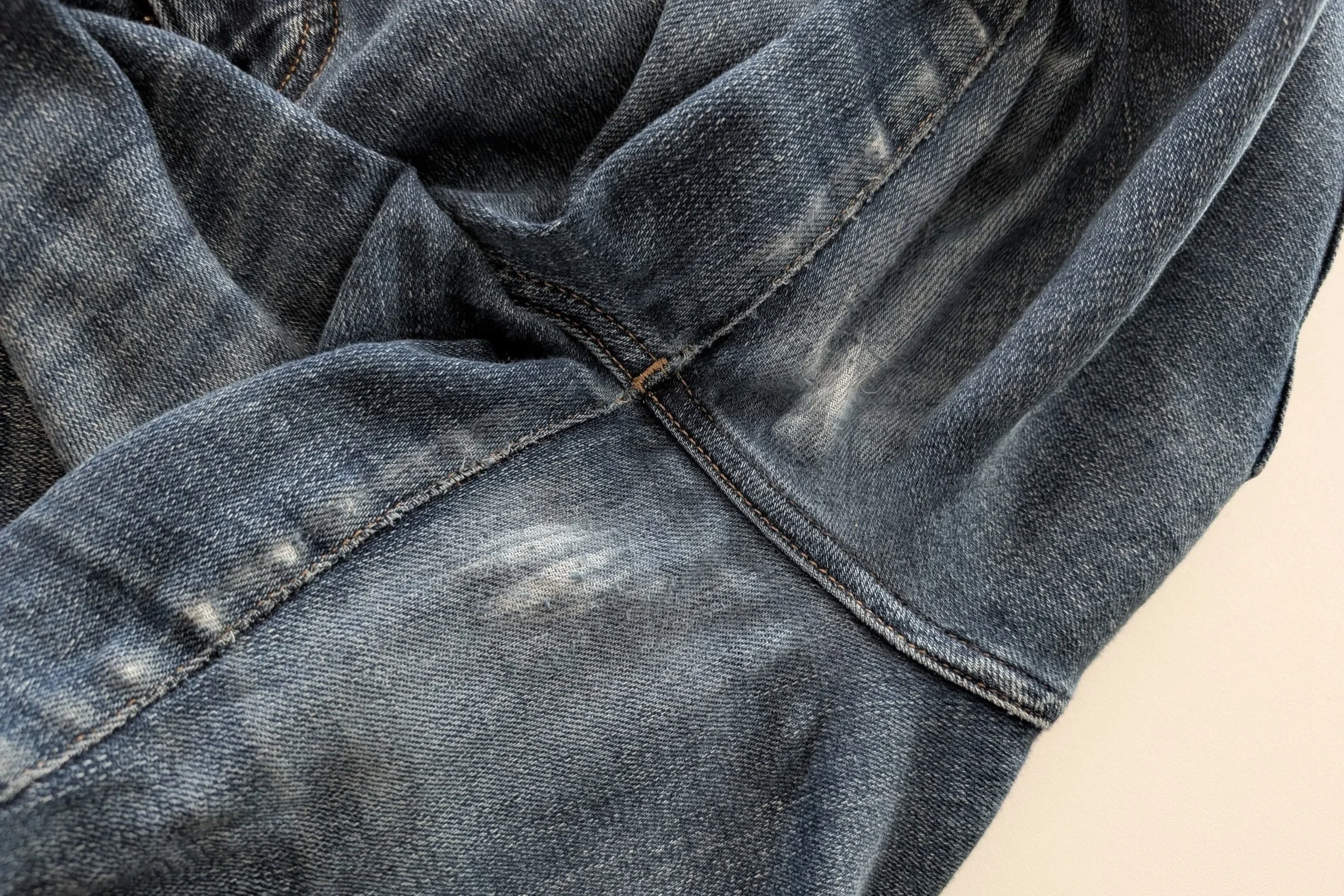
Repairing before a hole has broken through helps create a more discreet and lower cost repair.
Stretch Fabrics
Many modern garments, especially jeans and fitted pants, include stretch fibers like elastane (also known as spandex or Lycra). You can usually confirm this by checking the garment’s content tag.
Stretch fabrics behave differently because the synthetic fibers break down faster than natural ones like cotton. This makes them more challenging to repair and typically less durable over time. Additionally, the repair will be much stronger than the fabric itself, so the next most likely place a hole will form is directly next to the repaired spot. That said, early repairs on thinning fabric will likely only expedite the tearing on other areas of the garment. We do not recommend reinforcing thinning areas like we do with 100% cotton denim. It is best to waiting as long as possible to repair garments with significant stretch. Get these repaired when you are unhappy with the hole.
Other Woven Fabrics
This category includes items like collared shirts, non-denim pants, jackets, and dresses.
In general, it’s best to repair these as soon as the damage bothers you. Unlike knits, woven fabrics generally won’t unravel quickly, so there’s usually no immediate urgency. However, waiting too long will eventually result in a larger damaged area, and therefore a more costly repair. This is a broad category with a lot of exceptions, so never hesitate to reach out with questions.
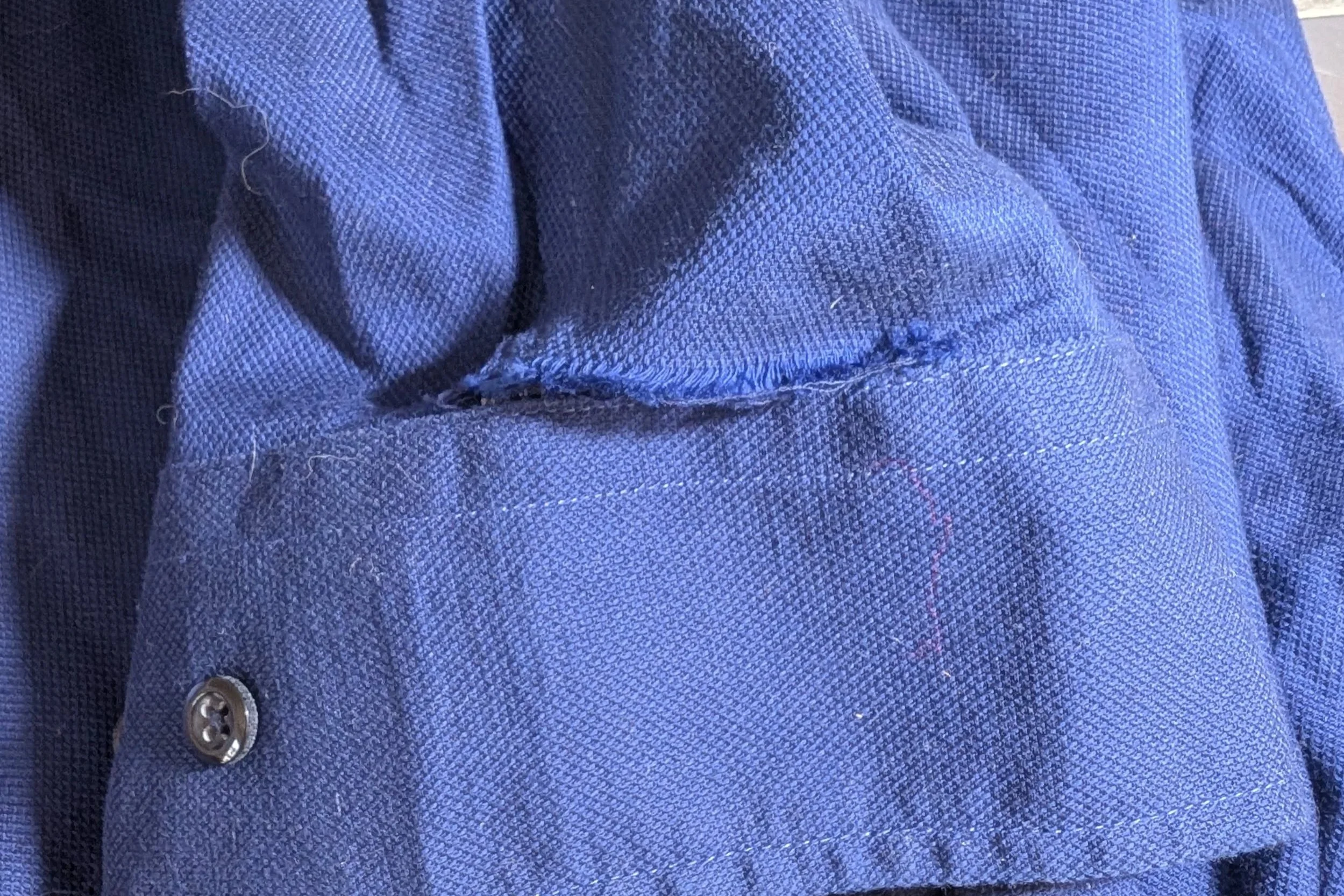
A woven collar shirt with a hole near the cuff
Lightweight Knits
Think t-shirts, leggings, and activewear (this does not include sweaters)
With knits, timing is more important. Once a hole appears, it’s best to repair it as soon as possible. Knit fabrics naturally unravel, which means small holes can grow quickly with wear and washing.
Unfortunately, thinning areas in lightweight knits are difficult to reinforce effectively, and we do not recommend repairing weak areas. But, once a hole forms, early repair can help extend the life of the garment.
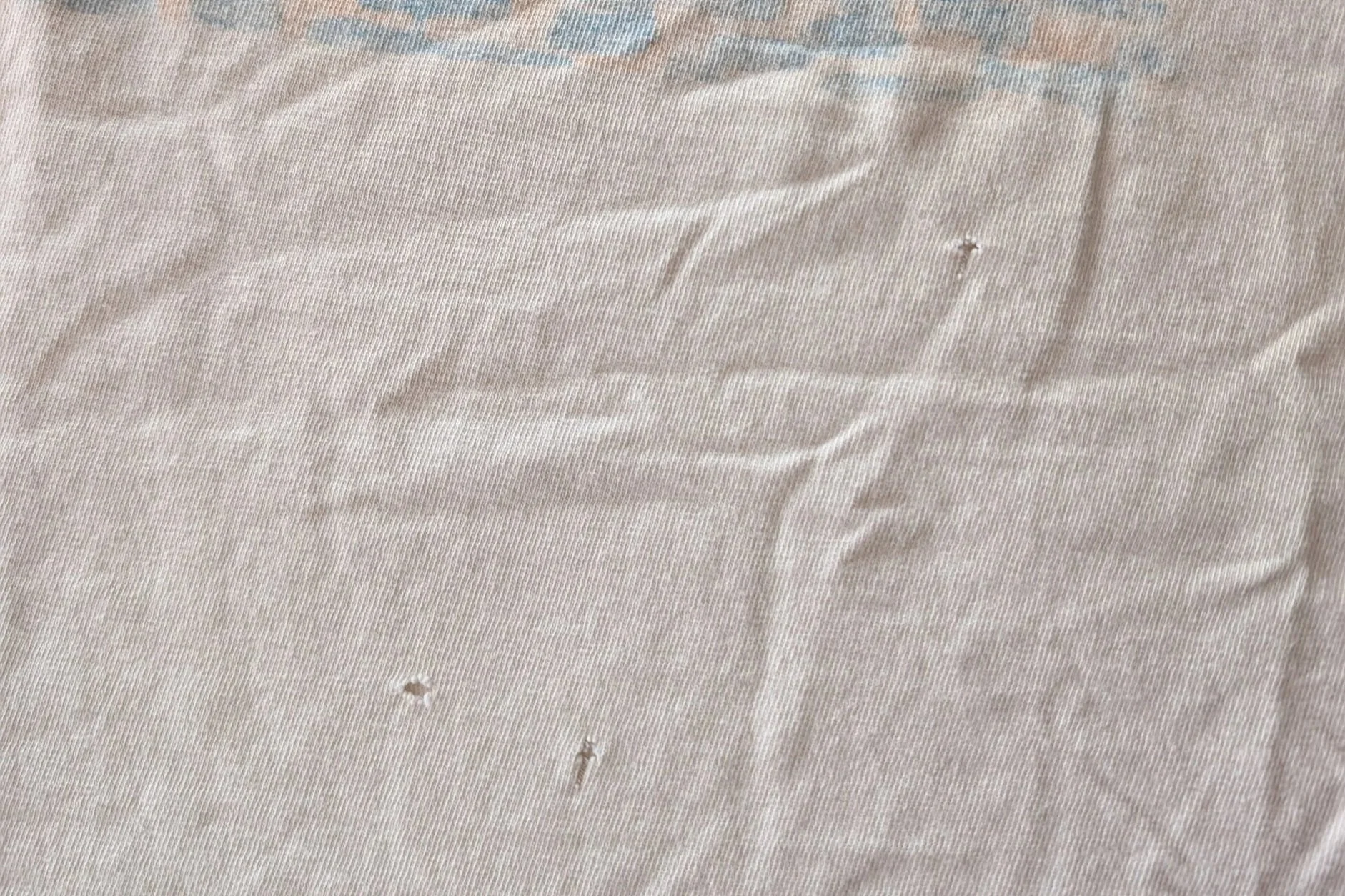
This is the perfect time to repair this cotton t-shirt. The holes are still small which will allow for a much more discreet and low-cost repair.
Sweaters
Sweaters, require the most proactive care.
The ideal time to repair a sweater is before you even see a hole. Addressing thinning areas early is the simplest and most cost-effective option.
However, most sweater damage comes from moths or snags which means you have an unavoidable hole. If you notice a hole:
Stop wearing the garment immediately
Avoid pulling or stretching the area
If possible, use a safety pin to secure the hole and prevent further unraveling
Because sweaters are knit, they can unravel very easily. While large holes can still be repaired, they require detailed handwork and become significantly more expensive as they grow.
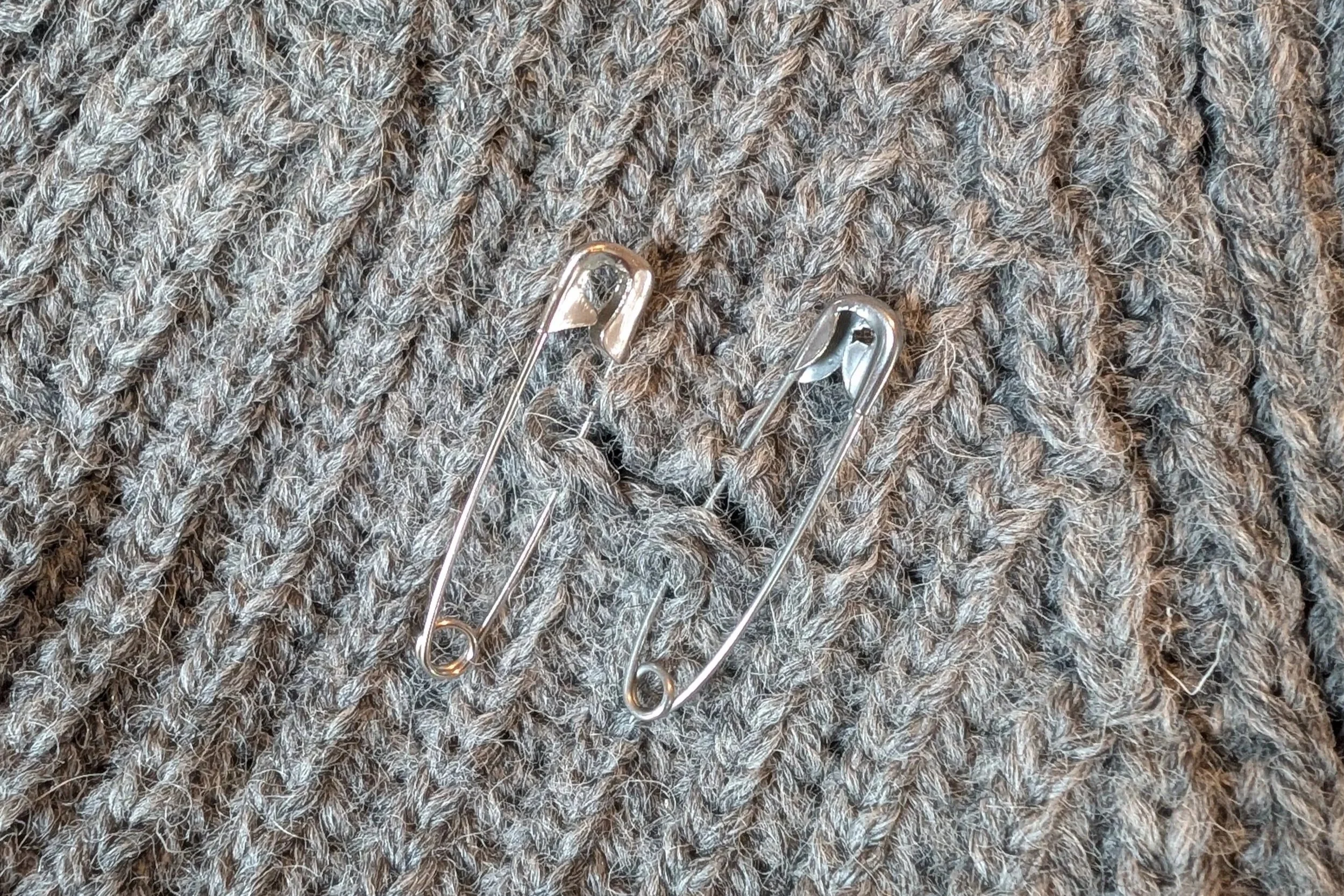
Adding pins to sweater hoes will help keep them intact until a repair can be made.
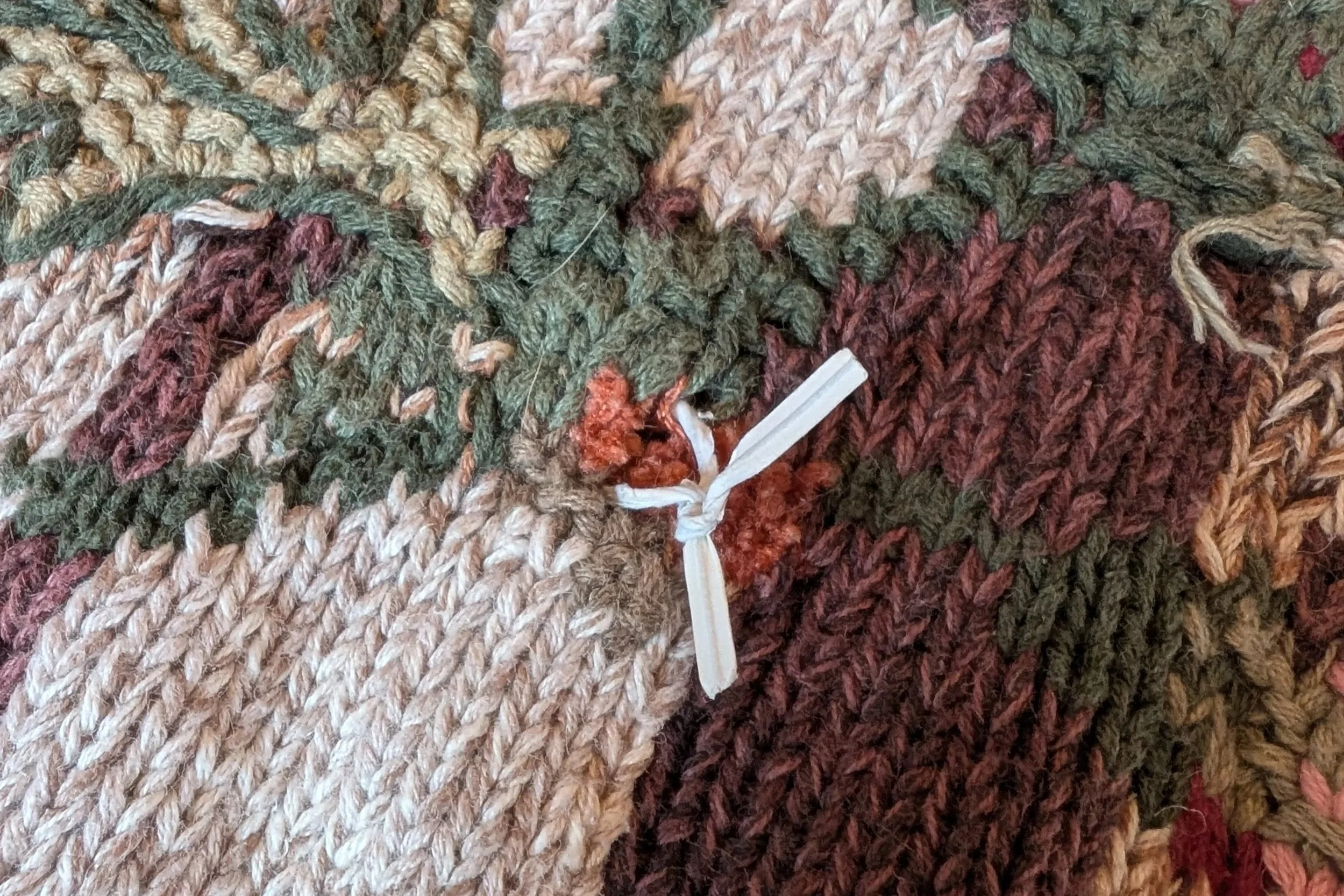
If you do not have pins, you can use other items to secure holes, like this twist tie.
When in doubt, ask…
Every garment is different, and sometimes the best course of action isn’t obvious. If you’re unsure whether something is worth repairing, how urgent it is, or what your options are—reach out.
We’re always happy to take a look, answer questions, and help you decide what makes the most sense for your clothes and your budget.