
The Humble Zipper, Explained
Zippers are one of those things you really only notice when they stop working.
They’ are everywhere—jackets, jeans, bags, cushions—and yet they are often the first point of failure in an otherwise perfectly good piece. Understanding why comes down to something surprisingly simple: how they work, what they’re made of, and where they wear out.
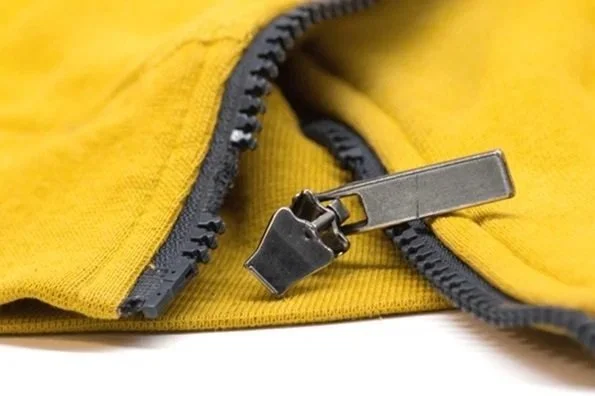
A broken zipper with missing teeth
How a Zipper Works
At its core, a zipper is just a clever alignment system. Two rows of teeth (or “elements”) run along either side of an opening. Each tooth is shaped with a hook and a hollow, designed to interlock with its opposite. The slider—the piece you pull—forces those teeth together in a precise sequence as it moves up and separates them as it moves down.
Inside the slider is a Y-shaped channel that guides the teeth into position. For the zipper to function, everything has to be consistent: tooth size, spacing, and alignment all need to match exactly.
When it works, it feels effortless. When it doesn’t, it’s usually because one small part has fallen out of tolerance.
The Most Common Types
Most zippers fall into one of three categories. Each has a distinct feel…and a distinct failure mode.
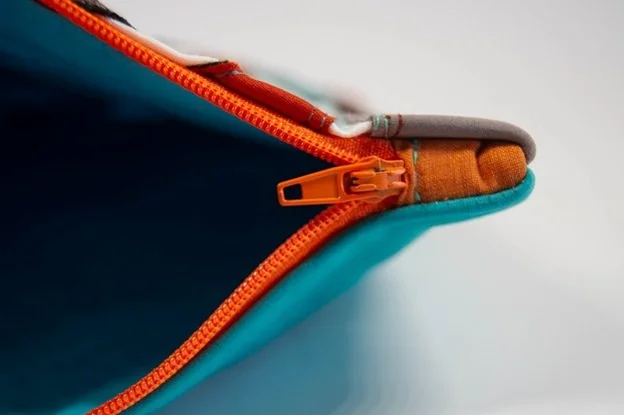
Coil Zipper
1. Coil (Nylon or Polyester)
These are made from a continuous spiral of plastic filament sewn onto the tape. They’re flexible, lightweight, and forgiving. Because the “teeth” are really a continuous coil, they can bend around curves and handle stress in multiple directions.
You’ll find them on:
Activewear
Bags and backpacks
Lightweight jackets
They’re also among the easiest to repair—minor misalignment can sometimes correct iteself with use. Unfortunately, when the coil gets pulled out of the tape (not entirely dissimilar from when the tape is pulled out of a cassette – 90’s kid throw back here) its time to replace.
2. Molded Plastic
These have individual plastic teeth, each molded and fused directly onto the tape. They strike a balance: lighter than metal, more structured than coil. They also resist corrosion, making them a go-to for outdoor gear.
You’ll see them on:
Fleeces and casual outerwear
Kid’s wear
Outdoor equipment
They are super versatile and are often repaired with a new slider and box stop… but when the teeth get damaged or removed, it’s usually time for a replacement. It’s a bit like replacing a toothbrush versus a full blown visit to the dentist.
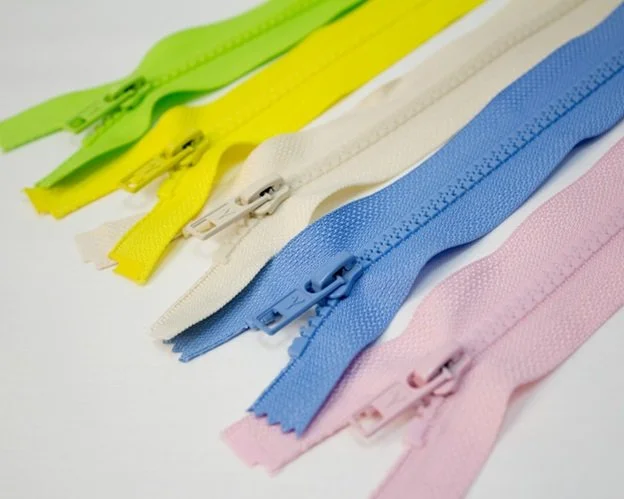
Molded Plastic Zipper
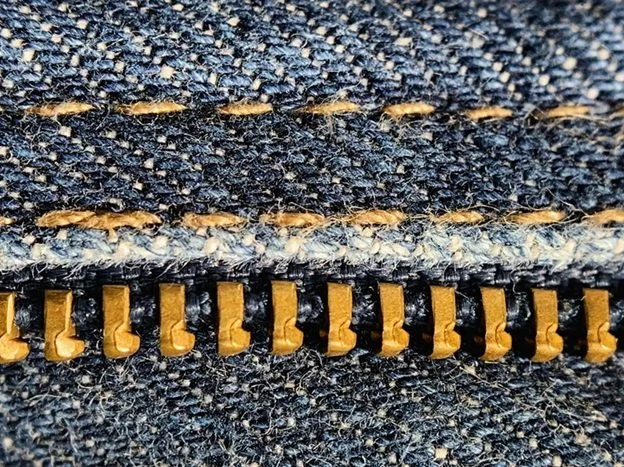
Metal Zipper
3. Metal
The original workhorse. Each tooth is stamped from metal and clamped onto the tape. They’re strong, rigid, and built for abrasion—but heavier and less flexible.
Common uses:
Denim
Leather goods
Workwear
They age well aesthetically, but not always mechanically. Depending on the metal, they can corrode or degrade over time—especially when dirt builds up or they sit unused for long periods.
Why Zippers Fail and What is Needed for Repair
Most people assume a broken zipper means “missing teeth.” Unlike my 1st grader, it’s not always.
1) The slider
The slider does the actual work of forcing the teeth together. Over time, it wears down and stops applying enough pressure. When that happens, the zipper “zips” but immediately separates behind it. This is the most common failure—and the most fixable. To identify if your zipper is broken due to the slider, check the zipper over for missing teeth or visible wear. If it doesn’t have these, it may be the slider.
This does not require the entire zipper to be replaced, instead it just needs a new slider. This is the most simple and least expensive zipper repair.
2) Damaged or missing teeth.
If teeth are broken, bent, or missing entirely, the chain can’t interlock properly. This is the most easily identifiable as there will be areas that are obviously broken or distressed.
Replacement is usually the only solution
3) Failure at the base (pin/box)
On jackets, the insertion pin and retainer box take a lot of stress. If they crack or detach, the zipper won’t start correctly and/or the zipper will easily separate after being zipped shut.
If this is the case, this zipper needs to be replaced.
4) General wear
Zippers are often the least durable component of a garment. Dirt, corrosion, repeated stress, and simple time all contribute to failure.
Depending on the wear, these zippers could be repaired or replaced. Minor miss alignment and stiff movement can usually be repaired by cleaning, realigning and lubricating. However, broken tape or worn teeth most often require replacement.
When in doubt, get in touch. We love to help troubleshoot. Problem solving is the fun of repair. Let’s talk!